
新着情報

次世代エッジAI半導体研究開発事業「アナデジ混載型エッジAI SoC設計技術の研究開発」のサイトビジットが行われました
2026年7月7日(火)、東京科学大学 大岡山キャンパスにて、JST 次世代エッジAI半導体研究開発事業「アナデジ混載型エッジAI SoC設計技術の研究開発」(課題番号:JPMJES2515)のサイトビジットが行われました。
国立研究開発法人科学技術振興機構(JST)およびアドバイザをお迎えし、本研究開発課題の取り組みや進捗をご紹介するとともに、研究環境の見学、研究開発に関する意見交換をさせていただきました。当日は活発な議論を交わすことができ、貴重なアドバイスを頂きました。
御礼申し上げますとともに、引き続きプロジェクトに取り組んでまいります。
岡田研究室 事務支援員を募集しています(応募締切:2026年8月17日)
岡田研究室では、研究室運営を支えていただく事務支援員(1名)を募集しています。
経理・文書作成・学内手続き・学会開催事務・学生支援など、研究室運営全般をサポートしていただくお仕事です。
詳細および応募方法は、下記の公募案内をご覧ください。
応募締切:2026年8月17日(月)17時 必着
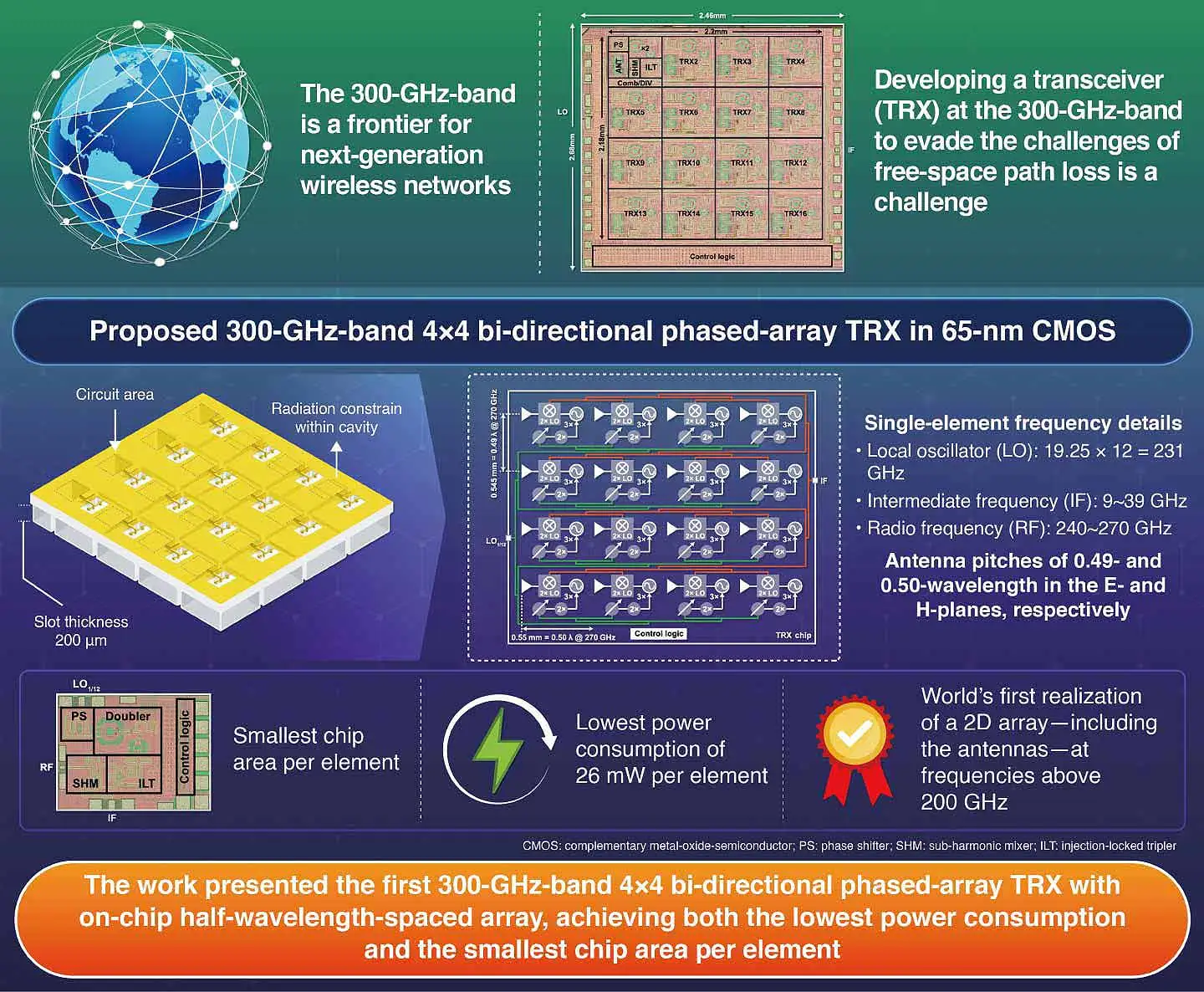
オンチップアンテナ搭載 300 GHz帯 2次元フェーズドアレイトランシーバICを開発
テラヘルツ帯で無線通信が可能な2次元フェーズドアレイトランシーバを、アンテナや双方向の送受信回路を含めすべてCMOS集積回路で実現することに成功しました。
本成果は、6月14日~18日に米国ホノルルで開催された「2026 IEEE/JSAP Symposium on VLSI Technology & Circuits」で発表されました。
要点
- 300 GHz帯2次元フェーズドアレイ送受信機を安価で量産性に優れたCMOS集積回路により実現
- 300 GHzの半波長間隔2次元4×4アンテナアレイと双方向フェーズドアレイ送受信回路を、オールCMOSの同一チップ上に集積することに世界で初めて成功
- 超低消費電力・低コストICの実証により、6Gでのテラヘルツ帯無線通信の実装を加速
論文情報
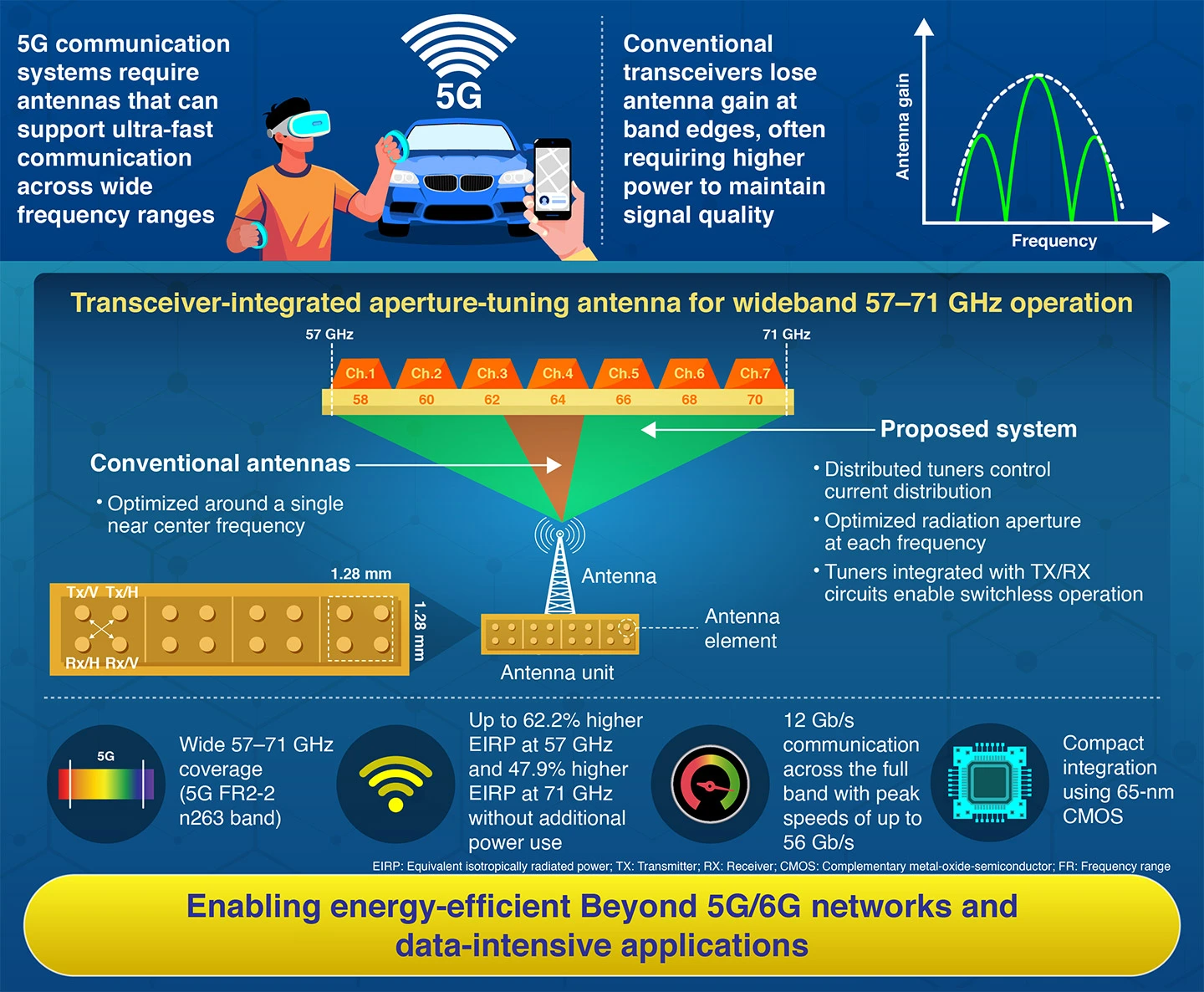
57~71 GHz全帯域で高効率通信を実現するミリ波フェーズドアレイ無線機を開発
Beyond 5G/6G時代に求められる超高速・大容量無線通信の実現に向け、5Gミリ波(n263バンド:57~71 GHz)全帯域に対応した広帯域フェーズドアレイアンテナと送受信IC技術を開発しました。
本成果は、6月14日~18日に米国ホノルルで開催された「2026 IEEE/JSAP Symposium on VLSI Technology & Circuits 」で発表されました。
- 5Gミリ波(57~71 GHz)全帯域で高効率かつ安定した通信を実現するアンテナ・送受信IC技術を開発
- アンテナの有効開口を周波数ごとに最適化する「開口調整アンテナ」と送受信回路の一体化により、広帯域動作と小型・低損失化を実現
- Beyond 5G/6G時代の超高速・大容量通信インフラや、高精細XR等の次世代サービスへの応用に期待
論文情報
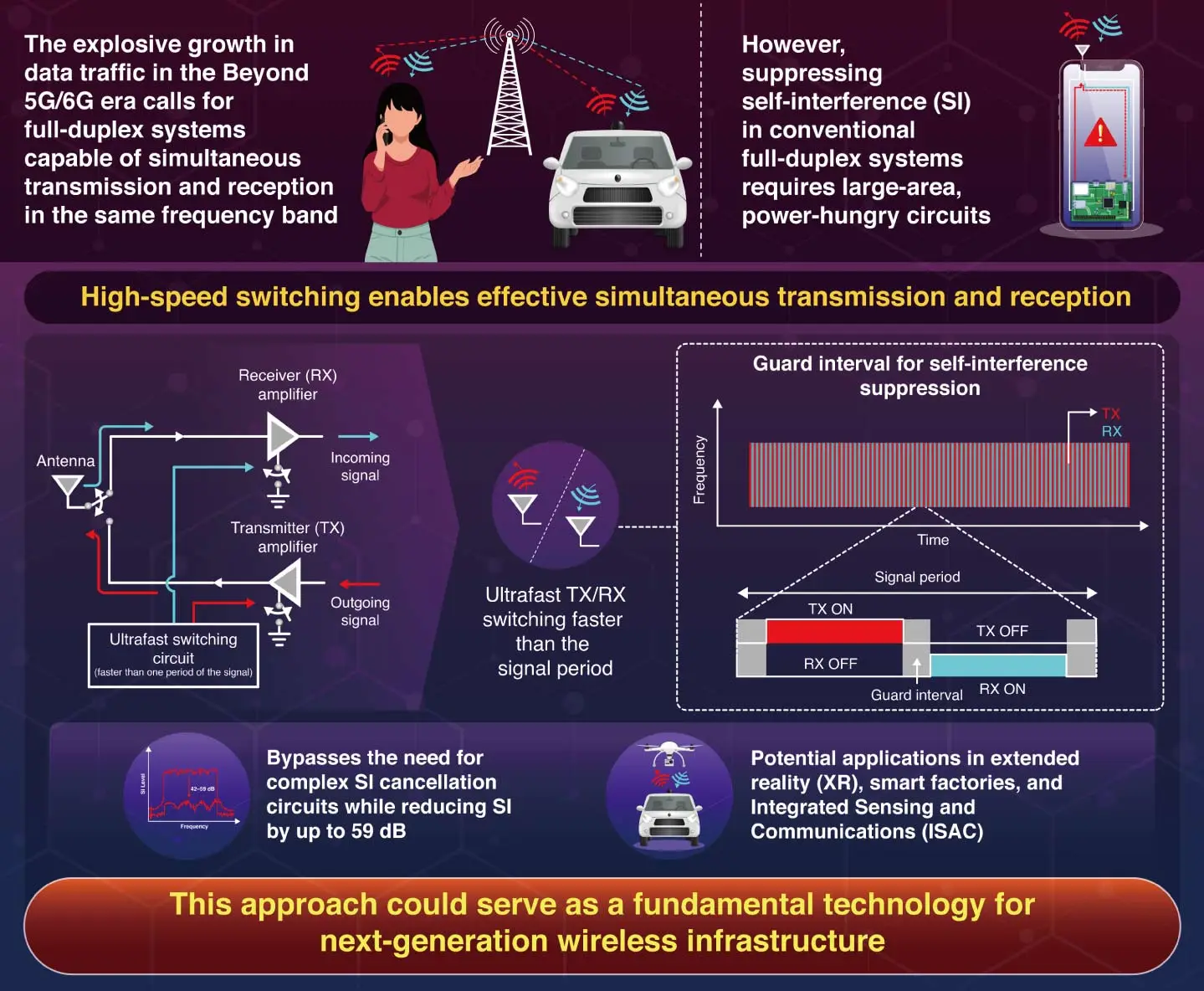
周波数利用効率を2倍に高めるミリ波帯通信ICを開発
Beyond 5G/6G[用語1]時代の爆発的なトラフィック増大に対応するため、広帯域ミリ波通信への適用が可能な帯域内全二重通信(IB-FD)方式、ならびに本方式を適用した無線ICを開発したことをプレスリリースしました。
本成果は、6月14日~18日に米国ホノルルで開催された「2026 IEEE/JSAP Symposium on VLSI Technology & Circuits」で発表されました。
要点
- 複雑な干渉キャンセル回路を排したミリ波帯全二重通信方式を搭載した無線ICを開発
- 信号周期を上回る超高速スイッチングにより実効的に同一周波数・同一時間での同時送受信を実現
- 超高速・低遅延な双方向通信により、スマート工場のリアルタイム制御や高精細XRへの応用に期待
論文情報
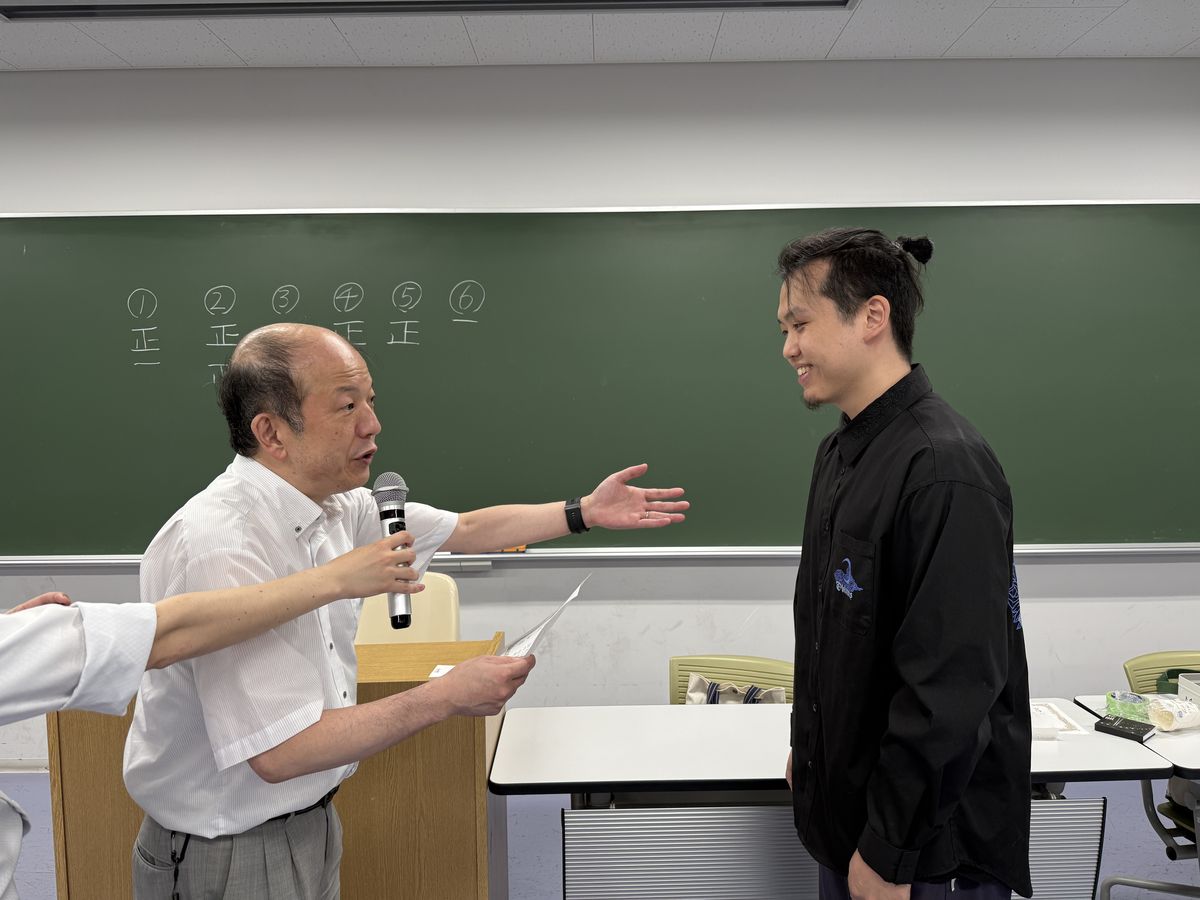
Minghao FanさんがMCRG研究会で最優秀ポスター発表賞を受賞
2026年度第1回MCRG(Mobile Communication Research Group)研究会において、岡田研究室のMinghao Fanさんが最優秀ポスター発表賞を受賞しました。受賞ポスターのタイトルは “A 60-GHz CMOS Phased-Array Transceiver with Aperture-Tuning Antenna for EIRP Efficiency Improvement” です。おめでとうございます!
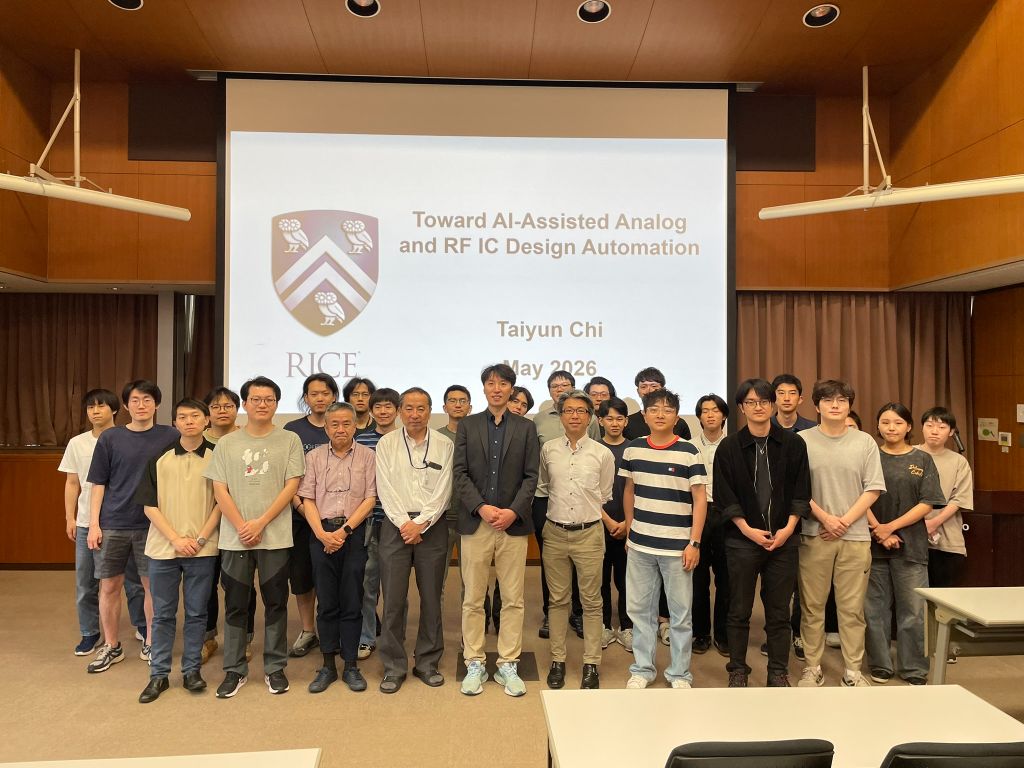
Prof. Taiyun Chi
RICE University(米RICE大学)のTaiyun Chi准教授にご講演いただきました。
講演後の質疑応答は1時間に及ぶなど、おおいに盛り上がりました!
Speaker: Prof. Taiyun Chi (Rice University)
Title: Toward AI-Assisted Analog and RF IC Design Automation
Abstract: LLMs have advanced rapidly over the past three years, with frontier systems now supporting trillion-scale parameter counts, million-token context windows, multimodal inputs/outputs, stronger reasoning, coding, computer use, and agentic workflows. At the same time, the way we work with LLMs has shifted accordingly, from prompt engineering to context engineering, and more recently to harness engineering. These advances and paradigm shifts have enabled many great successes in “AI for X,” especially in coding. This talk will present our group’s recent progress toward integrating LLMs into analog and RF IC design, a field that has conventionally remained manual, time-consuming, and dependent on deep domain expertise. We will discuss what today’s AI systems can do, where they still fail, and which directions appear most promising for analog and RF IC design automation. I will also cover AI techniques beyond LLMs that enable fast design-space exploration and performance optimization.
Bio: Taiyun Chi leads the Rice Integrated Systems and Electromagnetics (RISE) Lab, focusing on analog/RF/mmWave circuits and micro-systems design for wireless communication and neuro-engineering applications. Since joining Rice in 2019, his group has received multiple Best Paper awards and nominations, including the IEEE International Solid-State Circuits Conference (ISSCC) Lewis Winner Outstanding Paper Award in 2025 and 2024, the IEEE International Microwave Symposium (IMS) Advanced Practice Paper Award Finalist in 2024 and 2021, the IEEE RFIC Symposium Industry Paper Award Finalist in 2023, the IEEE RFIC Symposium Best Student Paper Award Finalist in 2022, and the IEEE Custom Integrated Circuits Conference (CICC) Best Student Paper Award in 2021. He was a recipient of the NSF
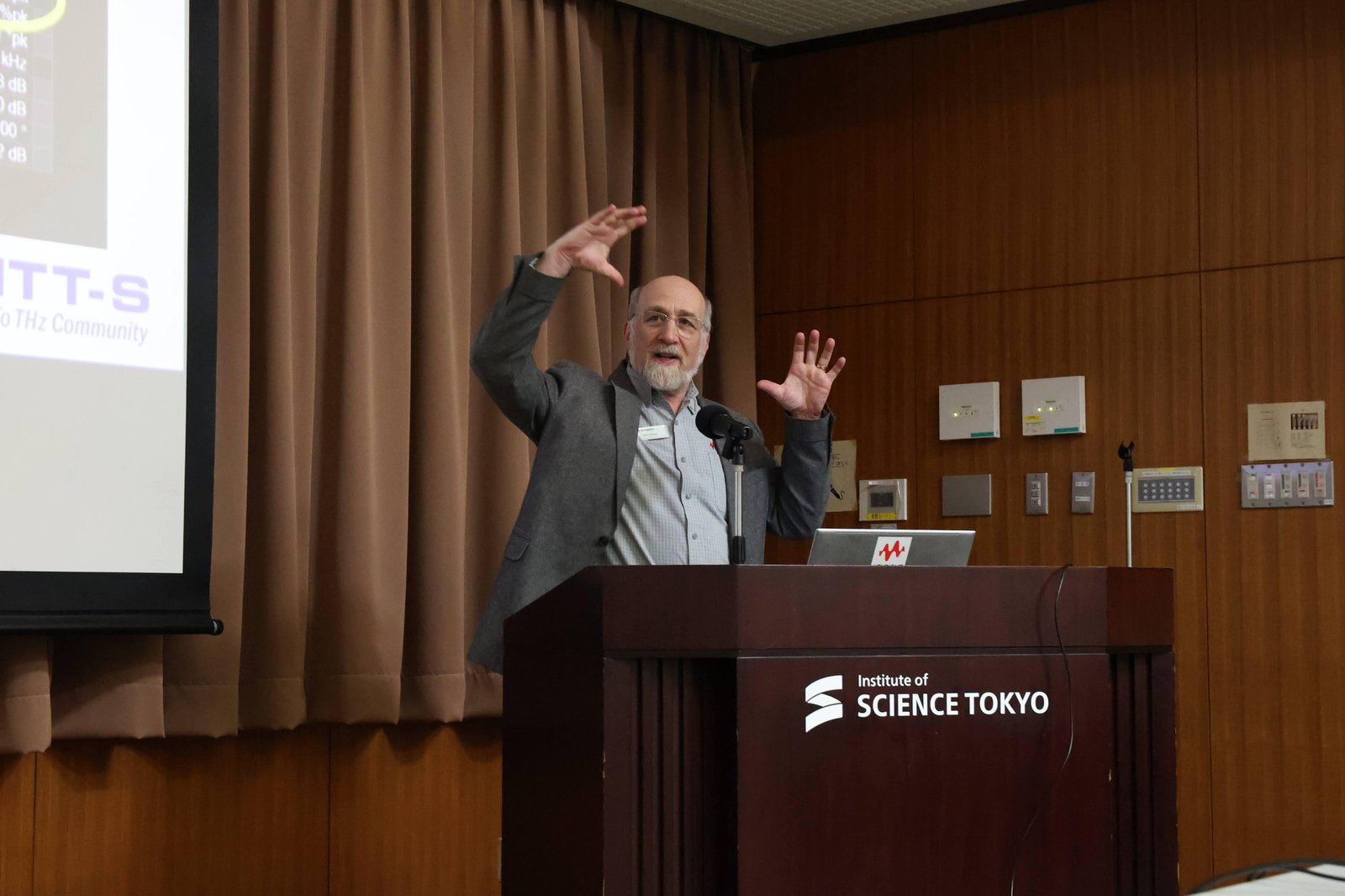
Dr. Joel Dunsmore
2026年5月21日(木)、東京科学大学 大岡山キャンパスにて、IEEE MTT-S Japan/Kansai/Nagoya Chapters 主催のDML(Distinguished Microwave Lectures)講演会が盛況のうちに開催されました。
講師として Keysight Technologies の Dr. Joel Dunsmore をお迎えしました。Dr. Dunsmore は、ベクトル・ネットワーク・アナライザ(VNA)およびVNAを用いた測定技術の研究開発を専門とする、世界的に著名な研究者の一人です。近年は特に、差動デバイス測定やミキサ測定を含む非線形測定、ならびに変調信号測定やスペクトラム測定の分野で精力的に活動されています。
Speaker: Dr. Joel Dunsmore (Keysight Technologies)
Title: Modern Methods for Component Measurements using Vector Network Analyzers
Abstract: Modern Vector Network Analyzers (VNA) have flexible hardware and software with much higher performance than VNAs of even a few years ago. There are a wide range of measurement applications, beyond simple S-parameters, that a VNA can address, and with precision that cannot be achieved by other test methods. VNAs now act as a multi-functional test system, providing an extremely wide range of device- and signal-characterization capabilities including noise figure, gain-compression, true-mode differ
ential device characterization, two-tone Inter-Modulation Distortion (IMD), phase-noise, mixer and frequency converter gain/phase/delay measurements. Very recently Vector Spectrum Analysis (VSA) capabilities have been added, including measurements of complex modulated signals such as Error Vector Magnitude (EVM), Adjacent Channel Power Ratio (ACPR) and characteristics of Digital Pre-Distortion (DPD). These capabilities, when properly configured, provide the most precise measurements of high-frequency mm-wave and sub-THz modulated signals, beyond the capabilities of stand-alone measurement instruments, as was demonstrated using 20 GHz bandwidth modulated signals at 250 GHz. This lecture illuminated the methods and capabilities for these advanced measurement methods for characterizing microwave components.
講演会終了後、Dr. Dunsmore を囲んで懇親会を開催し、親睦を深めるとともに活発な意見交換の場を持ちました。
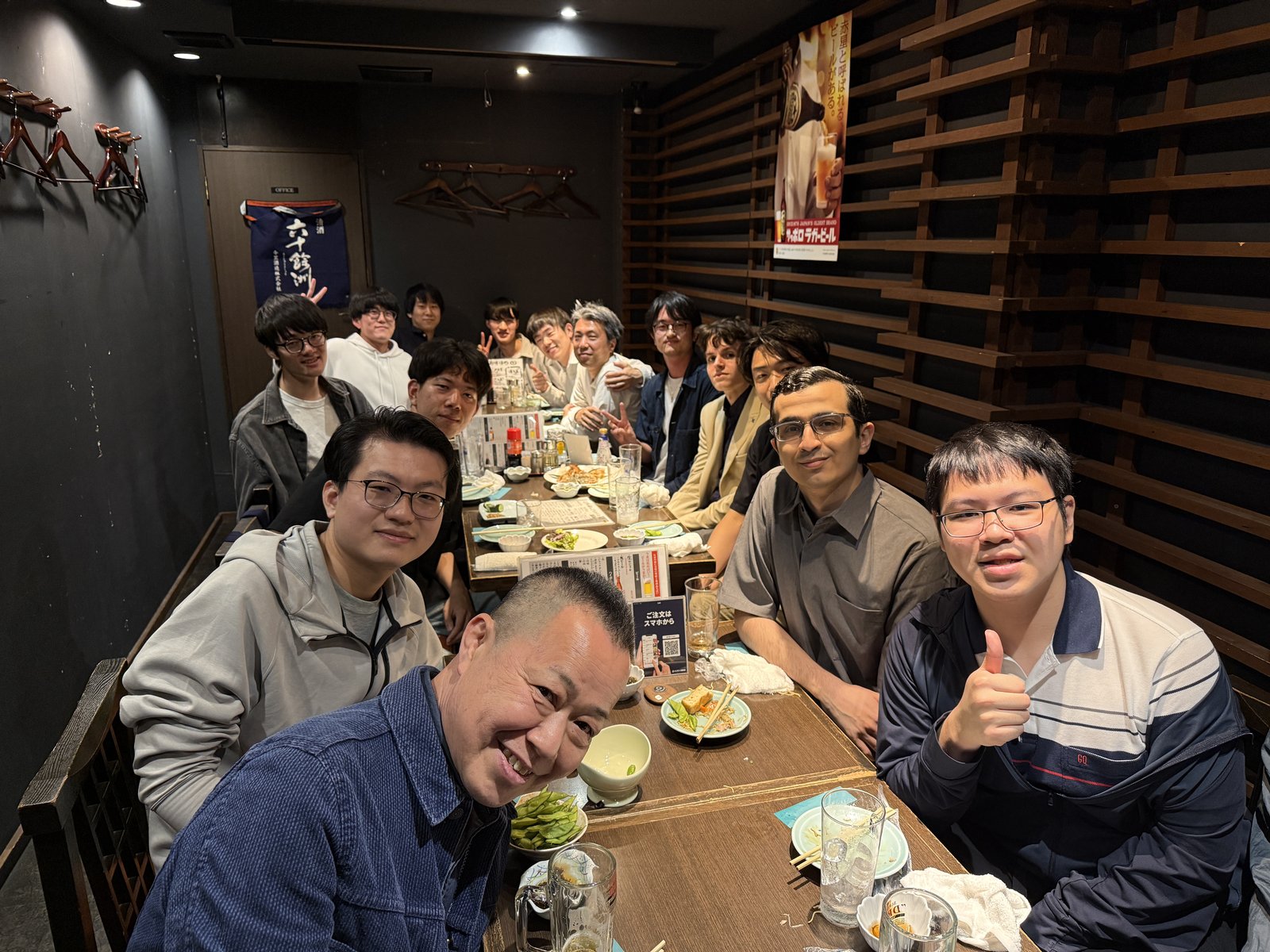
蒲田にて、岡田研究室の新歓コンパを開催しました。
蒲田にて、岡田研究室の新歓コンパを開催しました。
新メンバーは英語による自己紹介にチャレンジし、シニアメンバーもそれに応える形で歓迎スピーチを繰り広げました。突然の無茶振りで準備の時間もなかったB4学生も、慣れない英語スピーチによく健闘していました。
それぞれが最近楽しんだアニメやゲームの話題は、お互いの人となりを知るための良い切り口となっていました。
VLSI Symposium 2026に6件採択
2026年6月14〜18日に米国ハワイ州ホノルルで開催される IEEE Symposium on VLSI Technology and Circuits (VLSI Symposium 2026) において、岡田研究室から6件の論文が採択されました。本シンポジウムはVLSI技術と回路設計分野における国際的なフラッグシップ会議の一つです。採択論文は、2 GHz帯から240-270 GHz帯まで広範な周波数帯域をカバーするフェーズドアレイ無線回路と全二重トランシーバ、および高効率電力増幅器をテーマとしています。
Minzhe Tang, Ziyuan Ren, Yuxuan Liu, Yilun Chen, Minghao Fan, Dongfan Xu, Haiyun Gu, Zheng Li, Yi Zhang, Jian Pang, Daxu Zhang, Zezheng Liu, Dingxin Xu, Chenxin Liu, Duo Li, Yuncheng Zhang, Chun Wang, Yudai Yamazaki, Sena Kato, Hiroyuki Sakai, Kazuaki Kunihiro, and Kenichi Okada, “A Ka-Band Time-Division Multi-Stream Phased-Array Transmitter with Built-in Spatial Notch Generation for 6G MIMO”
Chun Wang, Olivia Angel Yong, Chenxin Liu, Wenqian Wang, Anyi Tian, Abanob Shahata, Takumi Kojima, Hans Herdian, Yudai Yamazaki, Sunghwan Park, Minzhe Tang, Dongfan Xu, Sena Kato, Yuncheng Zhang, Kazuaki Kunihiro, Hiroyuki Sakai, and Kenichi Okada, “240-270 GHz 4x4 Bi-Directional Phased-Array Transceiver with On-Chip Half-Wavelength-Spaced Array and Ultra-Low Power Consumption in 65-nm CMOS”
Minghao Fan, Yilun Chen, Zheng Li, Ziyuan Ren, Minzhe Tang, Junqing Liu, Yuxuan Liu, Dongfan XU, ZeZheng Liu, Yudai Yamazaki, Sena Kato, Yuncheng Zhang, Kazuaki Kunihiro, Hiroyuki Sakai, and Kenichi Okada, “A 57-71-GHz CMOS Phased-Array Transceiver with Aperture-Tuning Antenna Achieving 47.9-62.2% EIRP Efficiency Improvement”
Yudai Yamazaki, Ryuji Kinugawa, Takumi Kojima, Takaya Uchino, Anyi Tian, Chenxin Liu, Sunghwan Park, Kotaro Ito, Sena Kato, Chun Wang, Minzhe Tang, Takashi Tomura, Yuncheng Zhang, Hiroyuki Sakai, Kazuaki Kunihiro, and Kenichi Okada, “A 144Gbps D-Band Dual-Polarized MIMO High-Density Phased-Array Transceiver in 65nm CMOS for 6G UE”
Yuncheng Zhang, Duo Li, Zihang Zhang, Hiroyuki Sakai, Kazuaki Kunihiro, and Kenichi Okada, “A Switched Inductor-Capacitor Power Amplifier Supporting 100MHz 256-QAM”
Dongfan Xu, Haiyun Gu, Minzhe Tang, Yuxuan Liu, Ziyuan Ren, Yilun Chen, Minghao Fan, Duo Li, Zheng Li, Yi Zhang, Daxu Zhang, Zezheng Liu, Chun Wang, Sena Kato, Yudai Yamazaki, Hiroyuki Sakai, Yuncheng Zhang, Kazuaki Kunihiro, and Kenichi Okada, “A Reconfigurable 24-28GHz Time-Division Full-Duplex Transceiver with 59dB Self-Interference Rejection over 400MHz”
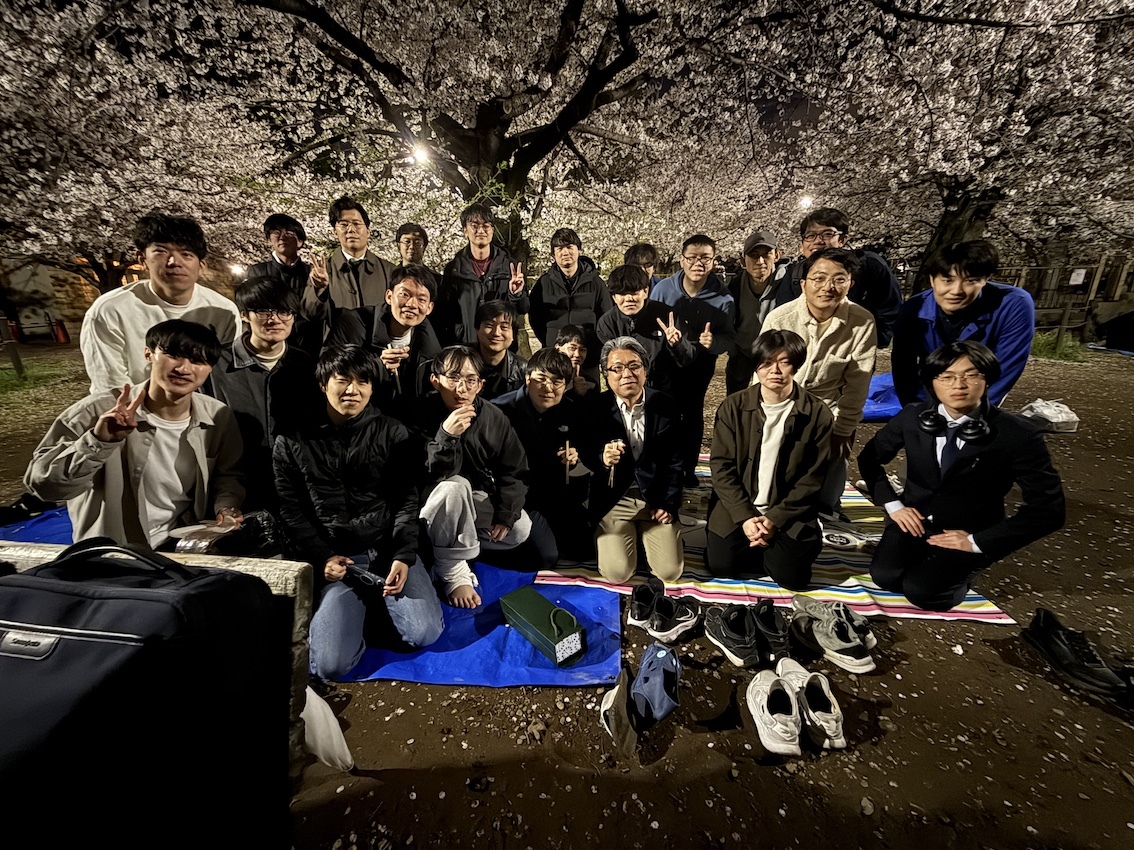
研究室で花見を行いました。
雨もやみ、少し寒い中でしたが、楽しい時間を過ごしました。
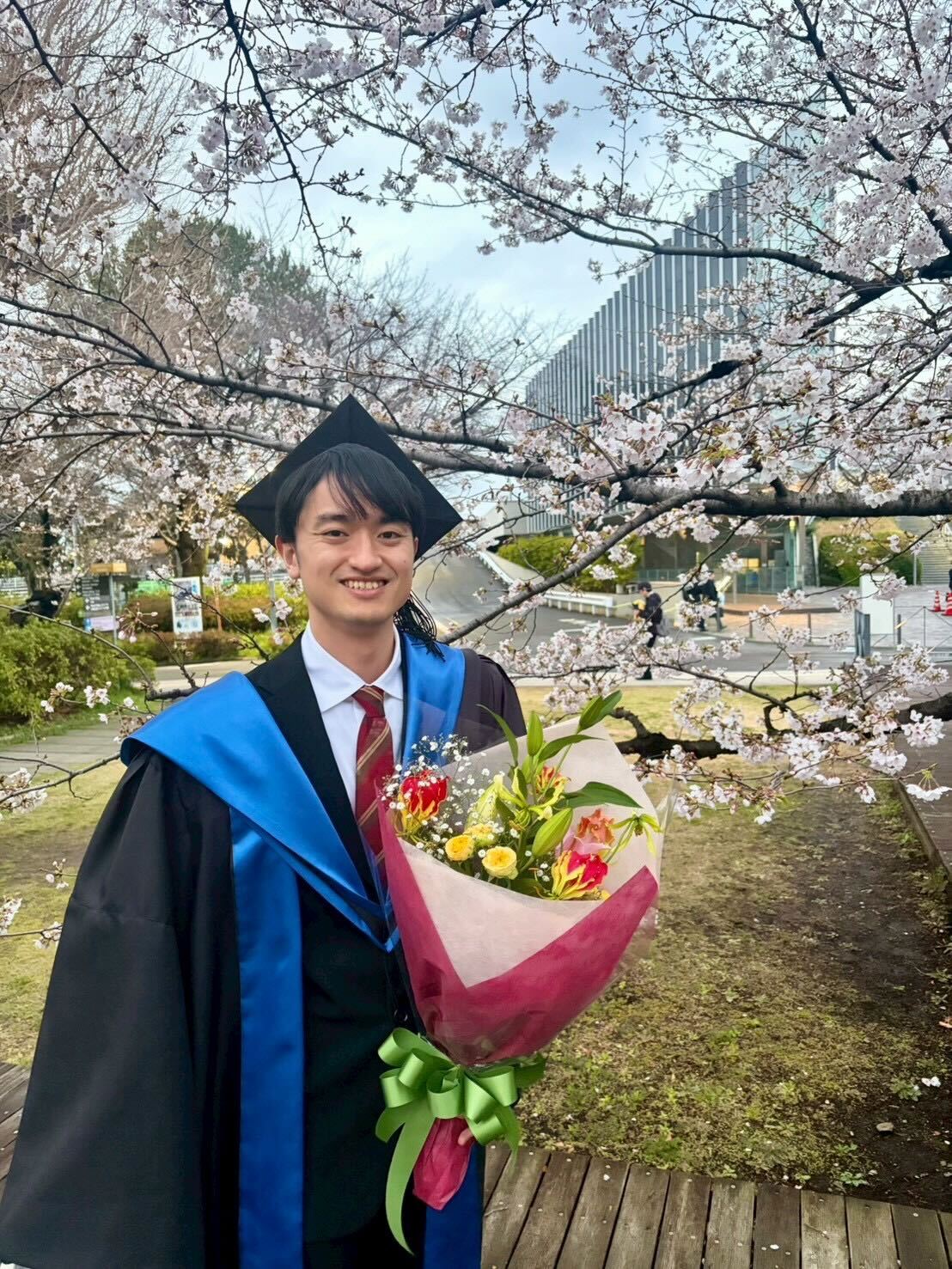
学位記授与式が執り行われ、当研究室の二人が代表に選ばれました。
東京科学大学学位記授与式が執り行われ、当研究室から山崎雄大さんが電気電子コースの博士課程修了生代表に、伊藤浩太郎さんが電気電子系からの学士課程卒業生代表を務めました。
卒業・修了おめでとうございます!
~新歓お花見会のお知らせ~
4月2日(木)の夕方にお花見をします!🌸
当日、岡田研に配属が決まった方はぜひご参加ください!
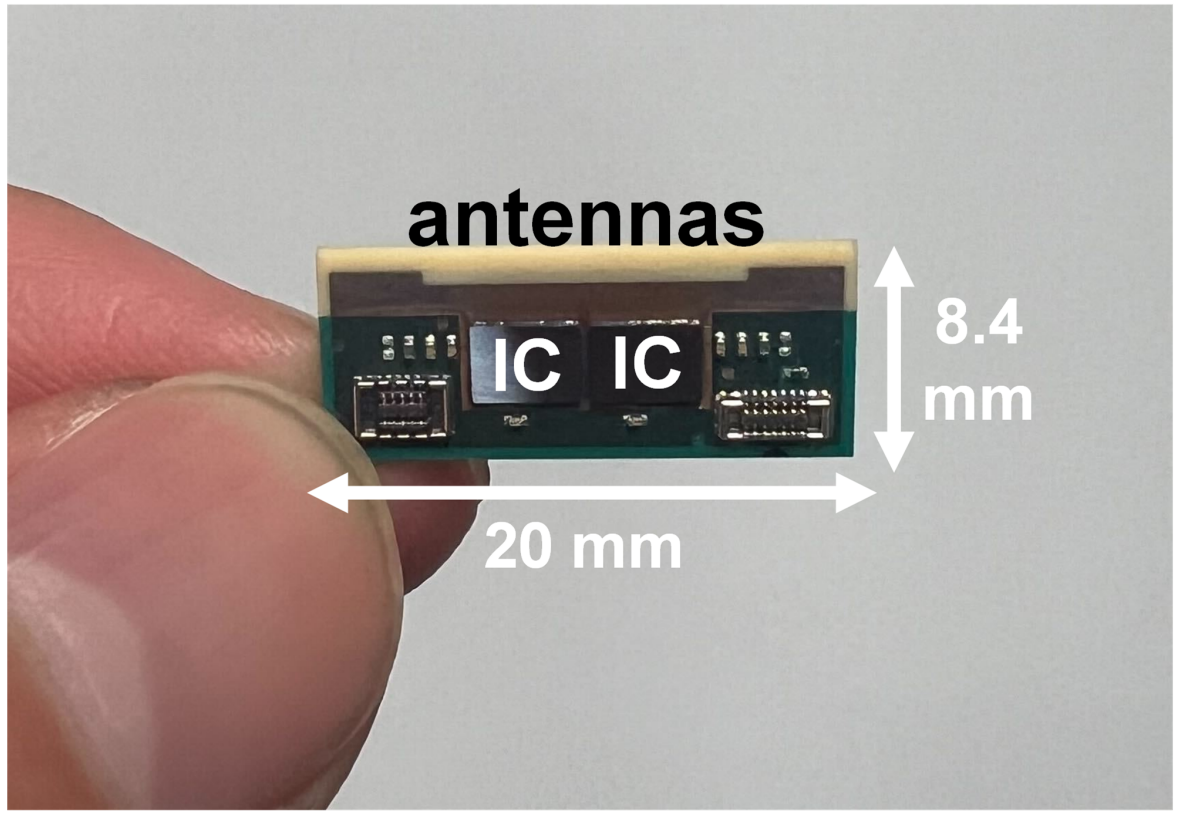
山崎雄大さんの6G端末向け150 GHz帯アンテナ一体無線機モジュールに関するJSSC論文が発表されました。
山崎雄大さんの、6G端末向けの150 GHz帯アンテナ一体無線機モジュールに関するJSSC論文が発表されました。
本論文は、2025年6月13日発表の「150 GHz帯超小型・低消費電力アンテナ一体無線機モジュールを開発」に関連する成果です。
参考URL:
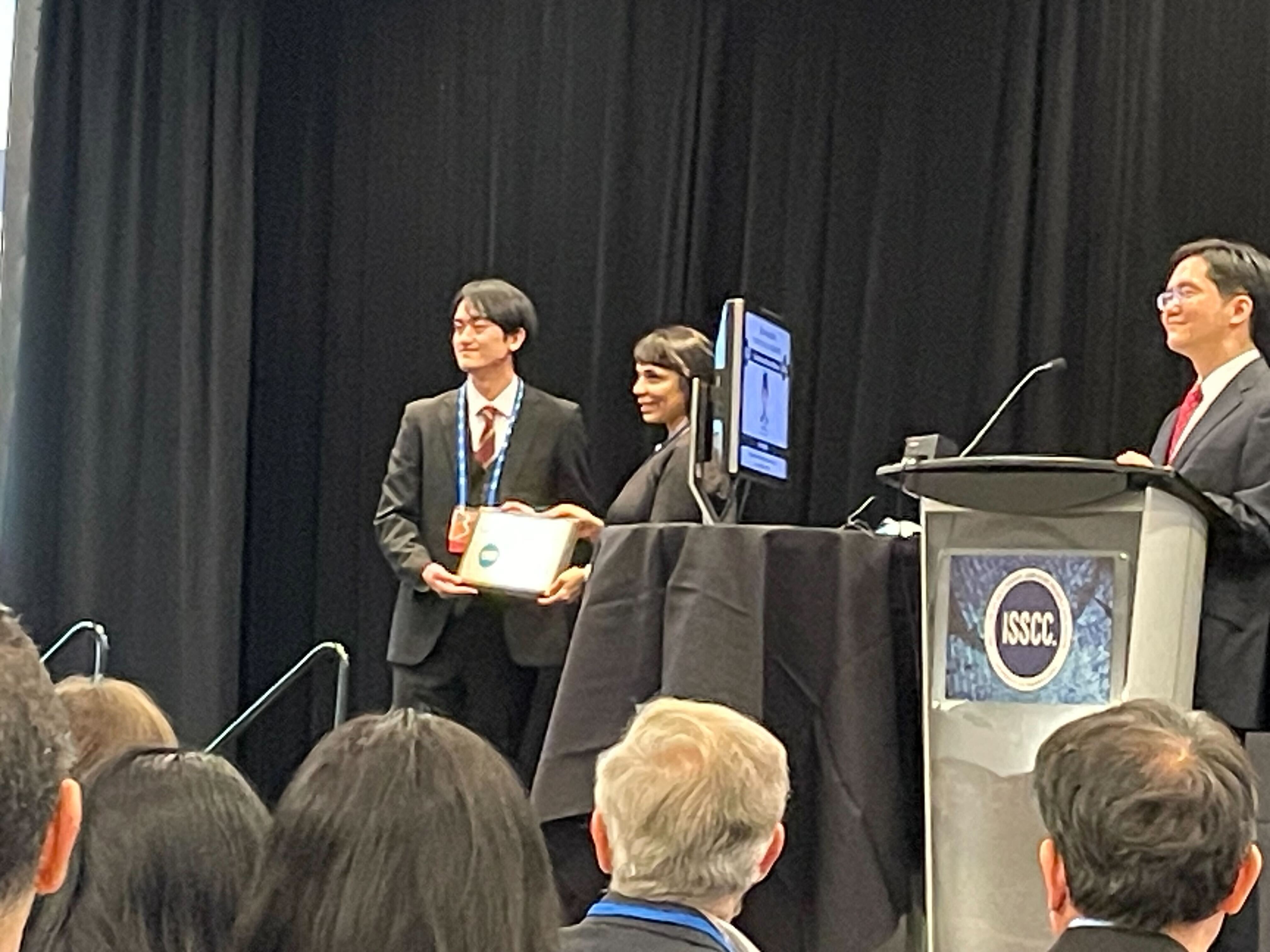
山崎雄大さんが、2026年2月にサンフランシスコで開催されたISSCC 2026においてStudent Research Preview Poster Awardを受賞しました。
ISSCC 2026にて、山崎雄大さんのStudent Research Preview(SRP)でのポスター発表が高く評価され、Poster Awardを受賞しました。おめでとうございます!
ポスタータイトル:A High-Power-Density D-Band Phased-Array Transceiver in 65nm CMOS for 6G UE Module
開催案内:2026年 工学院 電気電子系 大学院説明会(大岡山・すずかけ台)
工学院 電気電子系では、電気電子系への入学・進学を検討している方を対象に、大学院説明会を開催します。
主に修士課程に関する説明と研究室紹介を行います。
いずれの回も、現地会場とZoomを併用したハイブリッド形式で実施します。
大学院入学を検討されている方は、ぜひご参加ください。
入試制度や募集要項などの詳細については、大学の入学案内ページもあわせてご覧ください。
■開催日時
第一回 大岡山 2026年3月27日(金) 13:00〜17:00
第二回 すずかけ台 2026年5月15日(金) 13:00〜17:00
■プログラム
電気電子系への入学・進学を検討している方を対象に大学院説明会を行います。主に修士課程に関する説明と研究室紹介になります。
13:00〜14:00 電気電子系大学院入試説明会
14:00〜17:00 研究室見学会
■開催場所
第一回 3月27日(金) 大岡山キャンパス 南2号館 S2-204(S221)講義室/ハイブリッド(Zoom)
第二回 5月15日(金) すずかけ台キャンパス J2棟 J2-203講義室(予定)/ハイブリッド(Zoom)
■対象者
大学院入学を希望する学部生および大学院生
工学院/電気電子系の入学を検討している方
2027年4月/2026年9月より入学を希望する方
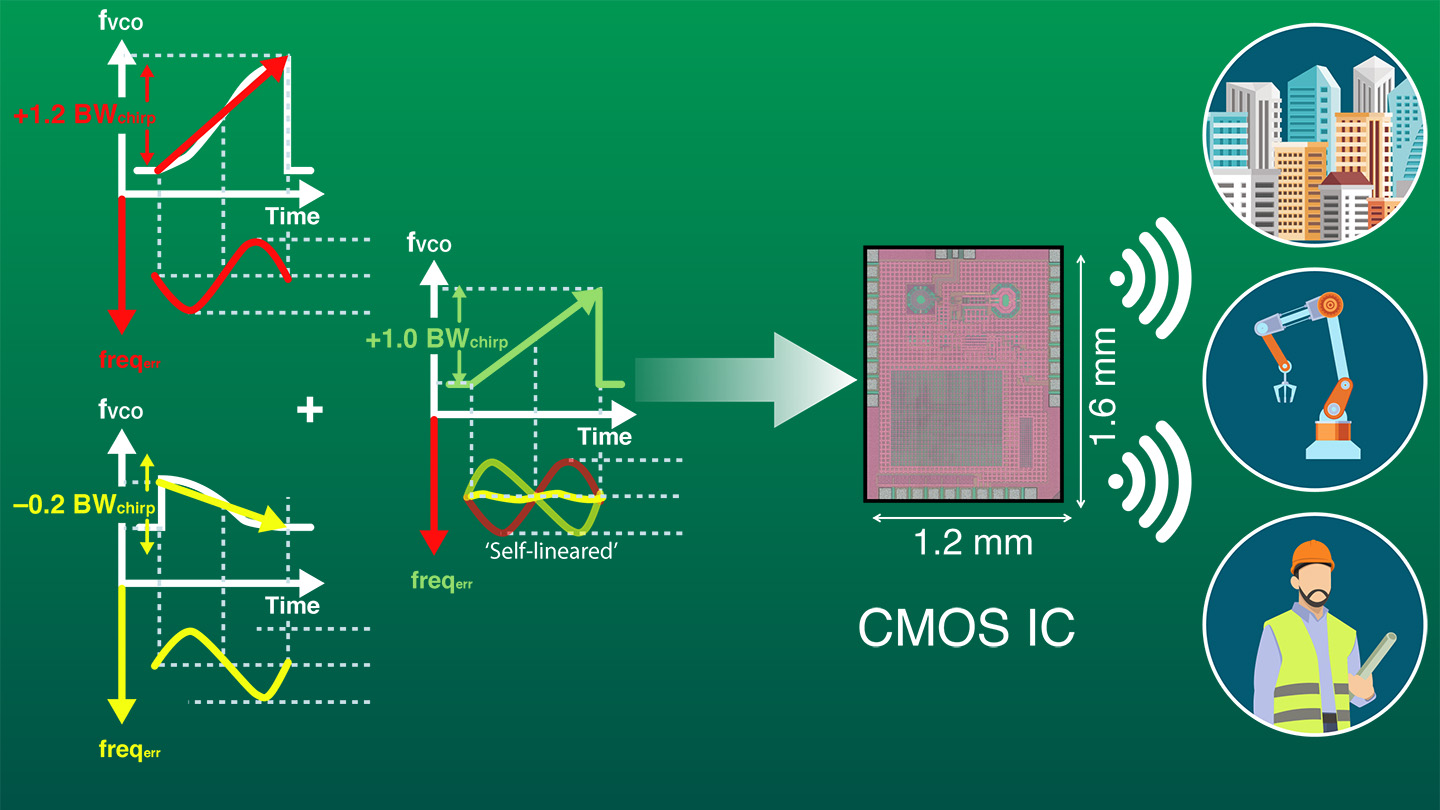
高性能FMCWレーダー用信号発生器CMOS ICを開発
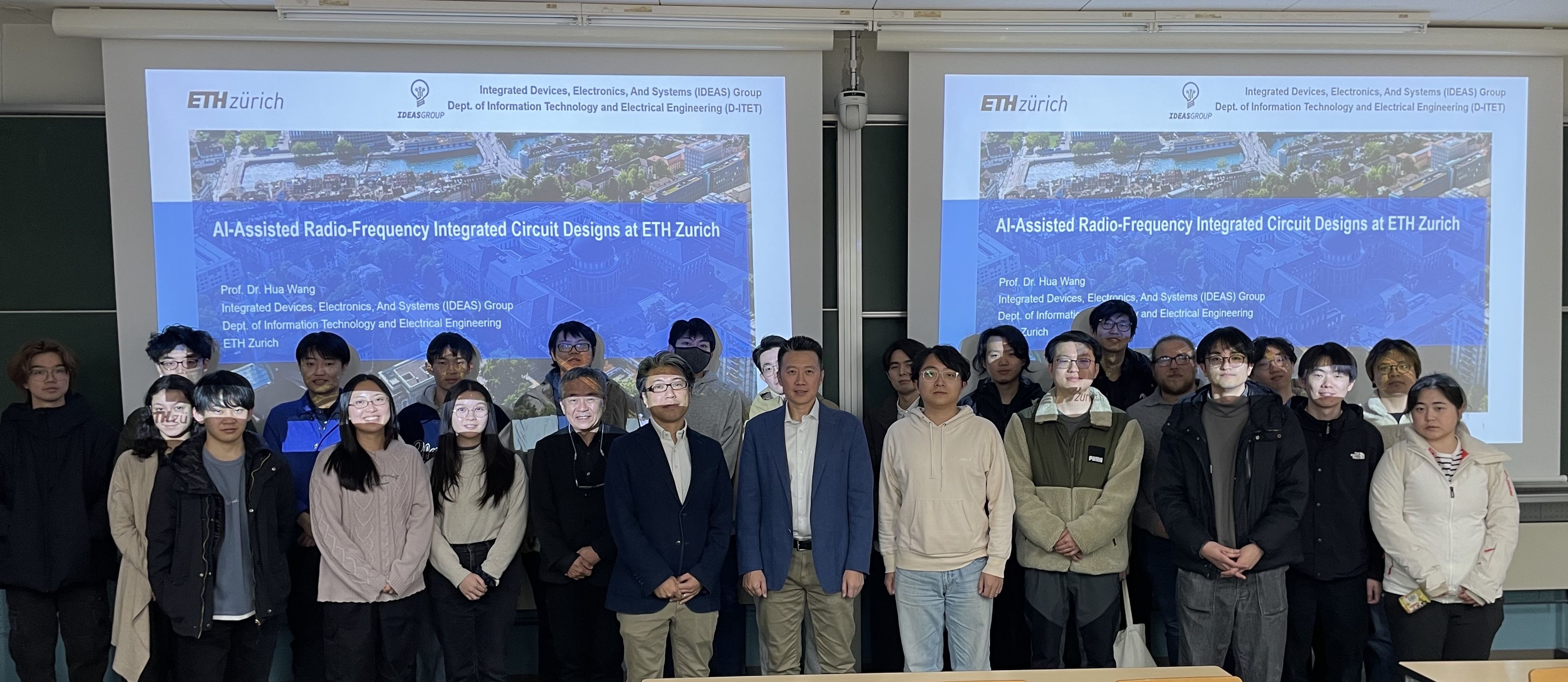
Prof. Hua Wang
ETH Zurich(スイス連邦工科大学チューリッヒ校)の Hua Wang教授にご講演頂きました。
Speaker: Prof. Hua Wang (ETH, Zurich, Swiss)
Title: AI-Assisted for Radio-Frequency Integrated Circuits at ETH Zurich
Abstract: In recent years, as AI for Science is gaining increasing momentum, there are rapidly growing interest in applying AI tools to facilitate RFIC designs or explore new design spaces. In this seminar talk, I will present a few on-going AI4RF projects at my IDEAS group at ETH Zurich. We will start with our project of AI-assisted template-seeded pixelated design for multi-metal-layer EM structures, which explores a new approach for efficient exploration and exploitation of the design space. Next, we will introduce our transfer learning assisted fast design migration, which potentially enables efficient design migrations over technology nodes and operating frequencies. Finally, we will present out project on top-metal-only RFIC redesigns for fast specs-to-silicon iteration enabled by AI-assisted inverse design. Finally, we will discuss challenges and future directions.
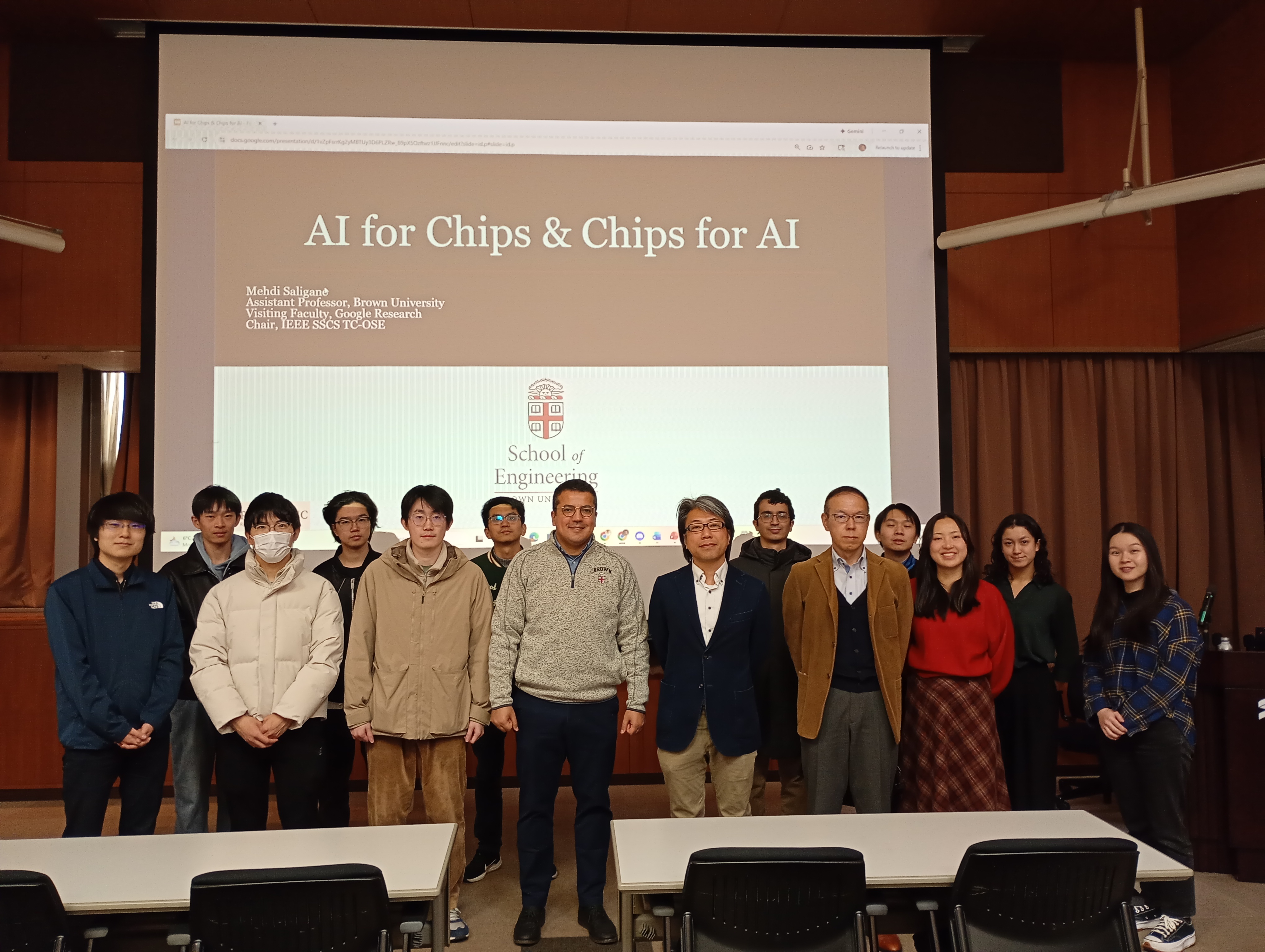
Prof. Mehdi Saligane
Brown University(米ブラウン大学)の Mehdi Saligane先生にご講演頂きました。
Speaker: Prof. Mehdi Saligane (Brown University, USA)
Title: AI for Chips & Chips for AI
Abstract: The exploding scale of modern applications is stretching yesterday’s integrated-circuit (IC) design flows beyond their limits. This talk presents a unified, open, and highly-automated paradigm—AI for Chips & Chips for AI—that simultaneously (i) harnesses artificial intelligence in EDA to build better silicon and (ii) architects silicon that runs AI better.
AI for Chips - Traditional analog layout still relies on expert heuristics. We introduce Agentic-RL gLayout, a goal-conditioned reinforcement-learning agent that replaces hand-tuned placement and routing with policy-driven planning, action, and self-correction. The agent ingests high-level objectives, observes the evolving layout state, and chooses between primitive commands and high-level macros. Positive rewards track goal attainment; penalties capture DRC violations, area bloat, and parasitics, producing cleaner, compact, and rule-compliant layouts without manual intervention. Built atop open-source engines such as OpenROAD, Open Se Cura, and OpenFASoC, the framework pushes layout quality while democratizing access to sophisticated analog design automation. Chips for AI - Conversely, deploying large language model (LLM) workloads at the edge demands silicon tuned for extreme efficiency. We unveil a hardware–software co-design stack centered on ConSmax, a highly parallel, element-wise alternative to Softmax that slashes latency and energy. By co-optimizing network topology, arithmetic precision, and accelerator micro-architecture, the framework meets sub-millisecond deadlines, preserves privacy, and cuts cloud dependence.
Finally, this talk will walk through an open chip design infrastructure augmented with LLM-guided code, circuit, and layout generation that turns hardware creation into a rapid feedback loop, where AI sharpens the EDA tools, while tailored accelerators speed up AI. Closing the “AI-for-chips, chips-for-AI” cycle should make taping-out test chips possible in weeks instead of years, thus propelling the next wave of semiconductor innovation.
Bio: Mehdi Saligane received the B.S. and M.S. degrees in Electrical Engineering Systems and Industrial Computing from École Polytechnique de Grenoble in 2009, and the M.S. Degree in electrical engineering from the University of Grenoble in 2011, and the Ph.D. degree in Electrical Engineering and Computer Science from the University of Aix-Marseille (IM2NP), France, in 2016. From 2010 to 2015, he was part of the Central Research and Development Group at STMicroelectronics in Crolles, France, focusing on adaptive, ultra-low-power digital design. In 2015, he joined the Michigan Integrated Circuit Laboratory at the University of Michigan, Ann Arbor, MI, USA, as a visiting research investigator. In 2019, he served as a Visiting Researcher at the University of California, San Diego, San Diego, CA, USA. He is a founding member of both the OpenROAD and OpenFASOC Projects. Since 2020, he has been a Research Faculty member at the University of Michigan. In 2024, he joined Google Research as a Visiting Faculty Member, and in 2025, he joined Brown University as an Assistant Professor of Electrical and Computer Engineering. His research interests include secure low-power and energy-efficient IC design, Biosensors, analog/mixed-signal design automation and open-source EDA, and custom architectures for lightweight language model accelerators. Dr. Saligane is the recipient of the 2023 Google Cloud Research Innovators Award and the 2021 Google Research Faculty Award. He served in leadership roles at the CHIPS Alliance from 2020 to 2023, including as Chair of the Analog Working Group and as a member of the Technical Steering Committee. Since 2020, he has served on the IEEE Solid-State Circuits Society (SSCS) Open-Source Ecosystem (TC-OSE) Technical Committee and has been the Chair since 2025. In addition, he co-founded and organizes the SSCS Chipathon Design Contest and the SSCS Code-a-Chip Notebook Competition at ISSCC and VLSI Symposium, fostering student engagement with open-source chip design.
ISSCC 2026で4件発表
ISSCC 2026で発表します!
Forum Presentation
- Kenichi Okada, “Exploration of 6G FR3 for Coverage, Capacity, and Sensing in Edge AI Era”
Regular Session
- Daxu Zhang, et al., “A 9.7GHz Self-Linearized-VCO-Based FMCW Chirp Generator Achieving 1.56GHz/µs Slope and 0.57µs Duration with 0.094% rms Frequency Error”
Dongfan Xuさん、Minghao Fanさんが、Student Research Previewで発表します。